Field Notes · Canopy
Jungle rules: sweat, salt and silence
A rainforest is thirty degrees and ninety percent humidity every day of the year, and what changes is you. The rules are short: cover the skin, dry the kit, drink the salt, walk slowly, and give the animals three nights.

The Climate Simulator is almost useless in the canopy realm, and that is the point of it here: Danum Valley is thirty degrees and twenty-three at night every month of the year, and it rains every second day. What the simulator shows is that the place does not change, so the traveller has to. Here are the rules that the guides in Manu, Danum and Bwindi repeat to every group, in the order they matter.
Cover the skin
Long sleeves and long trousers from dawn, in light fabric, and a head net for the dusk hours when the mosquitoes come out. This is against the insects and against the sun, which is at the equator and reaches through the canopy in shafts that burn. Leech socks in Borneo, gaiters in Uganda, and the willingness to look ridiculous, which everyone does within an hour.
Dry the kit
Humidity gets into everything. The camera fogs, the phone stops charging, the passport curls. Dry bags inside dry bags, a silica sachet in the electronics bag, and the acceptance that clothes do not dry overnight and will be worn damp. Lodges have drying rooms; the field centre in Danum has a line and a fan.
Drink the salt
Sweat in the jungle is constant and invisible, and it carries salt out with it. The headaches and the cramps that arrive on the second afternoon are salt loss more often than heat, and the cure is rehydration salts in the water rather than more water. Four litres a day is normal on a walking day; the guides carry more.
Walk slowly
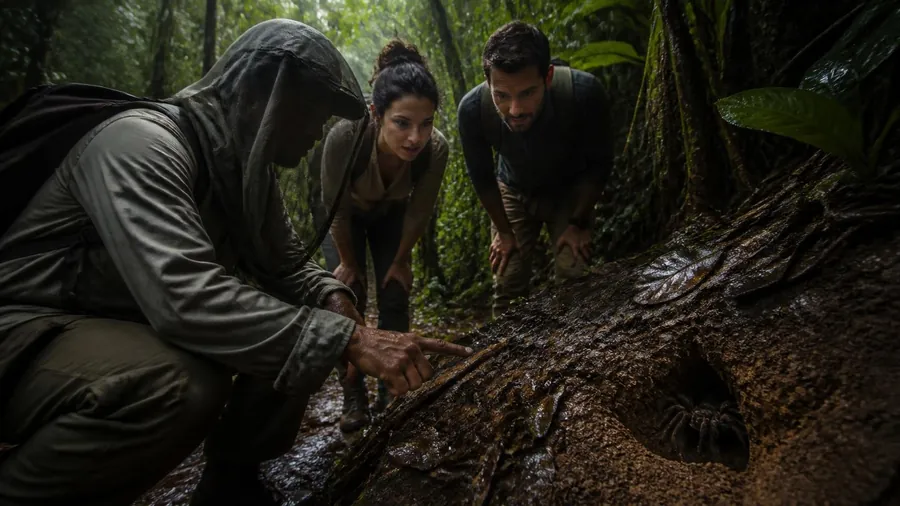
The forest shows itself to people who stand still. A trail walk at hiking pace sees trees; the same trail at a third of that speed, with stops every few minutes, sees the tarantula in the hole, the leaf-cutter highway, the troop of squirrel monkeys crossing above. The guides walk slowly for this reason and the visitors who hurry them see less. The night walk, with a torch and the eyes of the forest reflecting back, is the best hour of the day.
Give the animals three nights
One night in a forest sees the walkway and the frogs. Three nights give the orangutans a chance in Danum, the otters a certainty in Manu, and the clouded leopard a rumour. The Journey Simulator flags canopy trips with fewer than three nights, and the flag is not a bug.
Six weeks before
Yellow fever for Manu and Uganda, malaria prophylaxis for all three, a travel clinic appointment six weeks ahead so that the vaccinations take. The Pack Simulator lists the certificate as an item because Peru and Uganda check it at the airport.
Questions people ask
How bad are the leeches?
A nuisance, not a danger. Leech socks and long trousers stop most of them; the rest come off with a fingernail and bleed for a while. Borneo is the worst; the Amazon lowland has mosquitoes instead.
Which vaccinations?
Yellow fever is required for Manu and advised for Uganda; malaria prophylaxis for both and for parts of Borneo. Six weeks ahead, with a travel clinic, is the rule.