Half the world’s mountain gorillas live in a forest on the edge of the Rift, and a permit buys you one hour in the presence of a habituated family after a trek that can take twenty minutes or five hours.
Best window: June to August and December to February, the two dry seasonsDays needed: 2 to 3
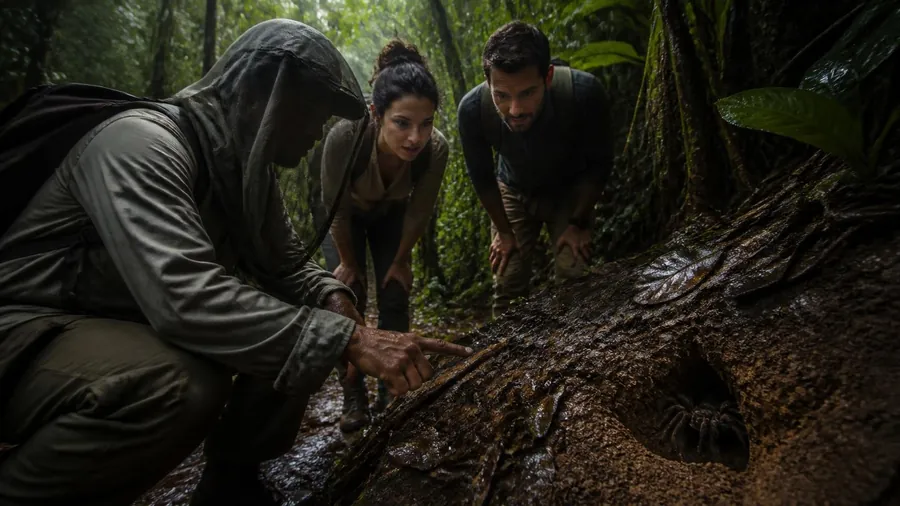
About a thousand mountain gorillas exist and roughly half of them live in Bwindi, a block of montane forest on the edge of the Albertine Rift where Uganda meets Congo and Rwanda. Twenty or so families have been habituated to human presence, and a permit buys eight people one hour with one of them. The trek to reach the family can be twenty minutes or five hours through steep, wet, thick forest, and the hour itself is the reason many people say they started to travel.
What the model says
Two dry seasons, June to August and December to February, with five to nine rain days a month against seventeen in April and October. Temperatures do not move: highs of twenty-three, lows of twelve, all year at 1,900 metres. The altitude is noticeable and rarely a problem. The Budget Simulator is the tool for this page: the permit dominates the cost, the lodge decides the band, and a second permit is the best money on the trip.
What the ground says back
Hire a porter. The forest is steep and slippery, the porters know it, and the twenty dollars feed a family that has an interest in the gorillas staying alive. The rangers match groups to families by fitness at the briefing and mostly get it right. The hour is quiet, close and over too fast. Uganda is a long drive from Entebbe; the light aircraft to Kisoro or Kihihi turns nine hours into one.
Days
Two days is a trek and the travel. Three adds a second trek or a day with the Batwa. Uganda pairs Bwindi with Queen Elizabeth park’s tree-climbing lions and the chimpanzees of Kibale for a ten-day loop.
A sample day
06:30Breakfast at the lodge, the forest steaming below
07:30Briefing at the sector headquarters, groups of eight allocated to families
08:15Into the forest with the rangers, the trackers already ahead on the radio
10:30The trackers found them: a last steep push through nettles and vines
10:45The hour: a silverback feeding, juveniles rolling, a mother with an infant a few metres away
11:45Out, slowly, everyone quiet
14:00Lunch back at the lodge, the certificate, the legs
16:00A village walk with the Batwa or a rest on the veranda watching the forest
A sample plan · 3 days
Day 1Fly or drive to the sector, a night at a lodge on the forest edge.
Day 2The gorilla trek.
Day 3A second trek in another sector for the fortunate, or the Batwa forest walk, then back to Entebbe or on to Queen Elizabeth park.
Climate by monthMonthly normals, rounded. Highs and lows in °C, rain days per month.Daylightday length on the 15th of each month at 1.1° S
12.2hJan
12.1hFeb
12.1hMar
12.1hApr
12.1hMay
12.1hJun
12.1hJul
12.1hAug
12.1hSep
12.1hOct
12.2hNov
12.2hDec
What can go wrong
▲▲TerrainSteep, muddy, thick; the porters exist to carry your bag and pull you up, and hiring one supports the village.
▲AltitudeTrekking between 1,500 and 2,600 m is noticeable but rarely a problem.
▲▲RainEven in the dry season the forest is wet; gaiters, gloves for the nettles, a shell.
▲▲Illness transferYou will be asked to stay away if you have a cold; the gorillas catch what we carry.
Getting there
Fly to Entebbe, then a long day by road to the park, or a charter or scheduled light aircraft to Kisoro or Kihihi. The park has four trekking sectors; your permit names the sector and the lodge should be in it. Treks start at the sector headquarters at eight after a briefing.
Hub Entebbe (9 h by road) or Kisoro airstrip (1 h)
Permits Gorilla permit from the Uganda Wildlife Authority, 800 US dollars per trek at the time of writing, booked months ahead through a tour operator or the authority; one hour with the family, groups of eight.
Avoid April and November are the wettest months; the treks run but the trails are mud.
Questions people ask
How hard is the trek?
Anywhere from thirty minutes to five hours each way, on steep, wet ground, depending on where the family slept. You can request an easier family at the briefing and the rangers try to match fitness to distance.
Is one hour enough?
Everyone says it goes in a minute and it does. The habituation experience in Rushaga extends it to four hours with a family that is being habituated, at a higher price.
Uganda or Rwanda?
Rwanda charges nearly twice the permit for easier access from Kigali and shorter treks. Uganda is cheaper, further and wilder. Both are extraordinary.
 Money · 2 September 2026
The cost of remoteness
The places on this site range from forty-five euros a day to two and a half thousand, and the difference is mostly distance from a road. Here is where the money goes, why, and how the same place can be reached at a fifth of the price.
Money · 2 September 2026
The cost of remoteness
The places on this site range from forty-five euros a day to two and a half thousand, and the difference is mostly distance from a road. Here is where the money goes, why, and how the same place can be reached at a fifth of the price.