Field Notes · Water
Tide, wind and the small boat
Half the places on this site are reached by a boat that is smaller than you expected, and the boat’s day is set by the tide and the wind, not by you. What the boatman is reading, why seven in the morning matters, and how to be a good passenger.
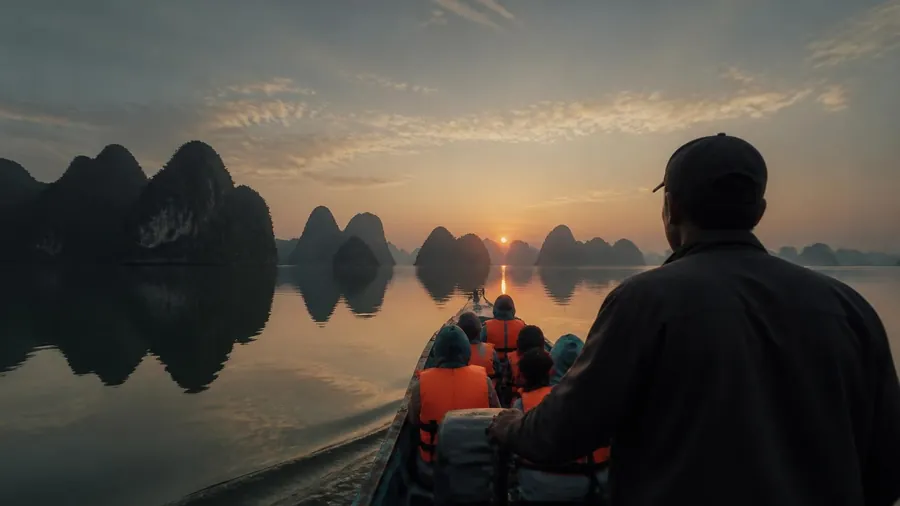

The panga in the Galápagos, the pirogue up the Manambolo, the mokoro through the papyrus, the speedboat to Shoab, the ferry to Mykines, the Zodiac off the Antarctic shore. The boat is how you reach most of the water and island realm, and it is almost always smaller and more exposed than the brochure suggested. The boatman is reading three things you cannot see, and understanding them makes the day.
The wind and the hour
In the tropics the wind rises with the sun. The sea off Socotra is glass at seven and a swell by eleven; the same is true in the Dampier Strait and off the Galápagos shores. The early start that the guides insist on is not a habit; it is the calm window, and the boat that leaves late comes back slamming with half the passengers sick. The Daylight Simulator shows how early dawn is, and in the tropics it is always around six.
The tide and the current
Raja Ampat’s richness comes from current, and the current comes from the tide. Dive sites are chosen for the state of the tide, and the boat waits for the slack or the flow that the site needs. In the Galápagos the tide decides the landing hour on the wet beaches and whether the panga can reach the rocks. Guides carry the tables; passengers carry patience. A dive or a landing that is delayed an hour has been delayed for a reason.
The animals in the water
Hippos kill more people in Africa than any other large animal, and the poler in the Okavango reads the channel for them: the ripple, the ears, the path in the papyrus. When the mokoro stops and turns, it has seen something. In the Amazon the logs in the river are the risk, and the boatmen read the water for them at speed. In neither place does the passenger help by pointing.
The swell and the Drake
The Faroe ferries and the Antarctic Zodiacs run in real swell, and the medication taken before the water gets rough handles most of it. On the Drake Passage the ship’s stabilisers and the pills are the plan, and the two days are survived rather than enjoyed by most. Small boats are usually easier than big ones because the horizon is in view.
Being a good passenger
On time. Life jacket on, not under the seat. Weight where the boatman puts it. Cameras in a dry bag until the boat stops. And when the boatman says the sea is too high, the answer is a nod. A Thousand Trips puts a probability on that sentence for the month, and the buffer day absorbs it.
Questions people ask
Why do the boats leave so early?
In the tropics the wind rises with the day; the sea is flattest at dawn and roughest at three. A boat that leaves at seven comes back on glass; one that leaves at ten comes back slamming.
Will I be seasick on a small boat?
Less than on a big one, usually, because the horizon is visible and the air is fresh. The medication helps for the crossings; the Drake is a different animal.